Hey there, fellow human! Ever feel like the news about the economy is always a bit... glum? Like, robots are taking all the jobs, the prices are soaring higher than my enthusiasm for doing laundry, and we're all just one avocado toast away from ramen noodle city? Well, guess what? It doesn't always have to be that way! Today, we're diving into the wonderful world of positive economic statements. Think of it as the economic equivalent of finding a twenty-dollar bill in your old jeans – a little burst of unexpected awesome!
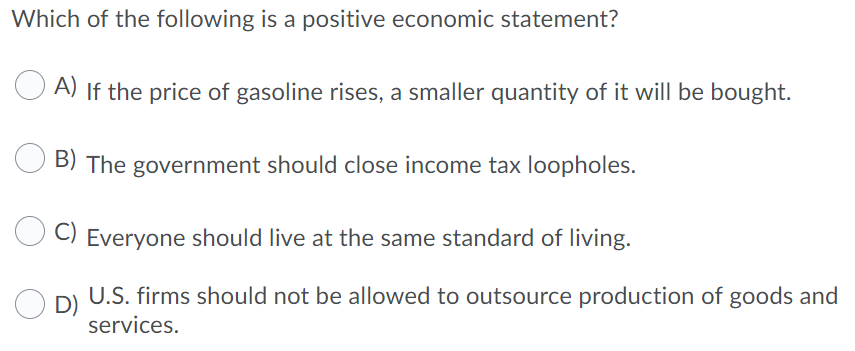
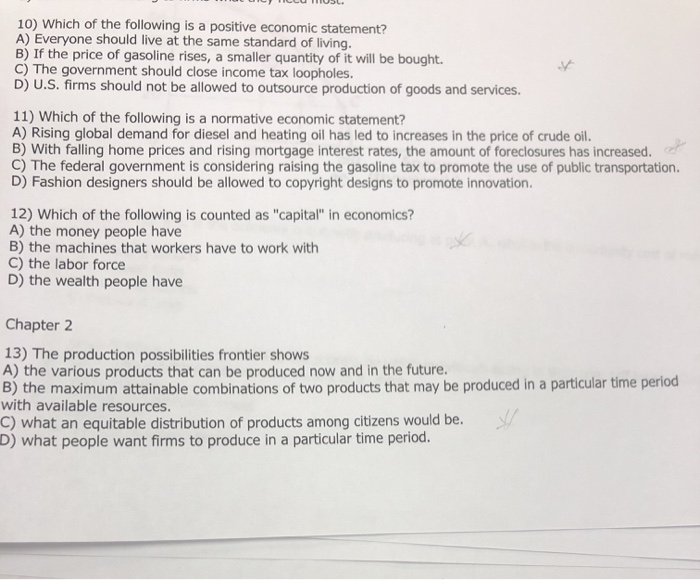
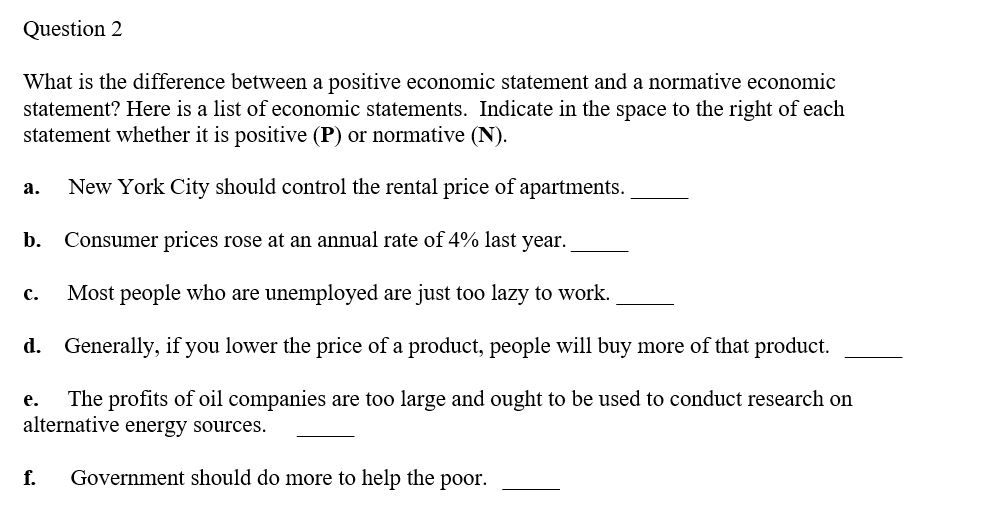
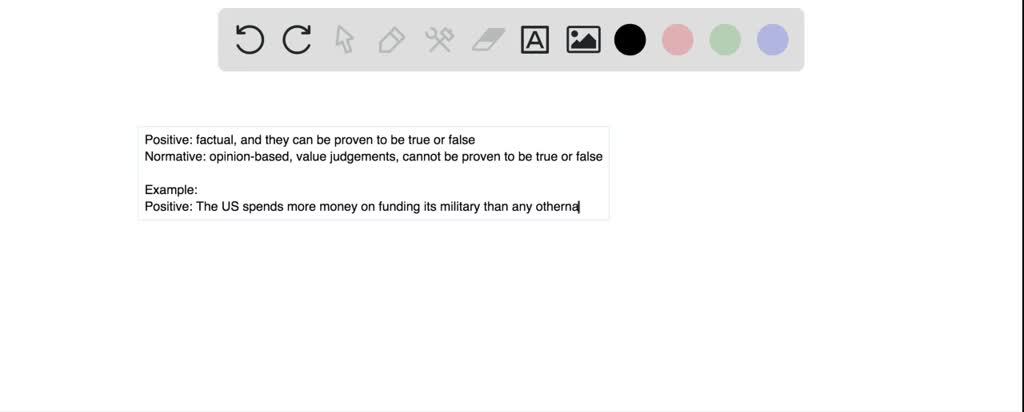
So, what exactly are we talking about here? Basically, a positive economic statement is something that can be proven or disproven with facts and data. It's like saying, "The sky is blue." We can look up and, yep, there it is, blue (most of the time, anyway – don't get me started on smoggy days!). It's not about opinions or beliefs, it’s about what is. No ifs, ands, or buts, just pure, unadulterated, factual stuff.
The "What IS" Game
Think of it like a detective solving a case. The detective doesn't go around saying, "I feel like the butler did it." Nope. They gather evidence: fingerprints, alibis, suspicious-looking teacups. That's what economists do too, but instead of teacups, they're looking at things like inflation rates, unemployment figures, and GDP growth. They’re the ultimate fact-checkers of the financial world.
Let’s break it down with an example. Imagine I say, "Coffee prices are going up." Is that a positive economic statement? You betcha! We can actually check the price of a latte today and compare it to last year. If it’s higher, my statement is true. If it’s the same or lower, well, then I’m just a grumpy coffee drinker who needs a reality check (or maybe just a cheaper barista!).
Now, compare that to saying, "We should lower coffee prices." See the difference? That’s a whole different ballgame. That’s an opinion, a recommendation, a wish whispered into the universe. We'll get to those later, but for now, we're focused on the solid, undeniable truths. The kind of statements that make economists nod sagely and say, "Indeed."
Positive vs. "Should-itive" Statements (A Playful Distinction!)
This is where things get really fun, folks! We have our positive statements, which are all about describing the world as it is. They are descriptive. They tell us, "This happened," or "This is happening." They’re like the weather report – "It’s raining." We can look outside and see if it's true. Simple as that.
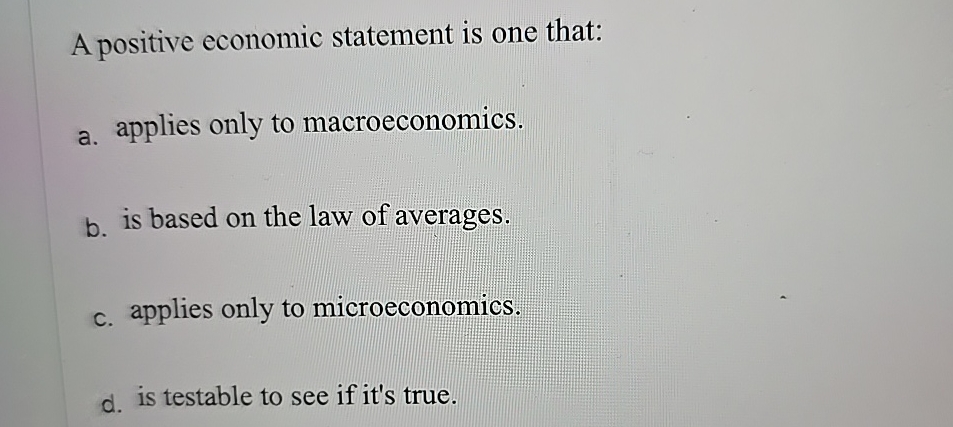
Then, we have what I like to call "should-itive" statements. These are the normative statements. They’re all about what ought to be, what should be done, what's fair or unfair. They’re the economist's equivalent of a political pundit or a philosopher at a particularly lively pub quiz. They involve values, judgments, and, let's be honest, a good dose of friendly debate.
For instance, "Inflation is at 3%." That's a positive statement. We can check the official inflation numbers. But, "The government should do something to control inflation." That's a "should-itive" statement. It’s a call to action, a policy suggestion, a strongly held belief. And you know what? Those are important too! They drive change and keep us all thinking about how to make things better. But for today, we’re keeping it strictly to the "what is" club.
Let's Get Down to Some Real-World Examples (No Eye-Rolling, Promise!)
Okay, let’s sprinkle in some actual economic stuff, but keep it light. Imagine you hear on the news:
- "The unemployment rate has fallen to 5%." Boom! Positive statement. We can look up the official stats. If they say 5%, our statement is confirmed. If they say 6.2%, then oops, not quite right, but still a factual claim that can be verified.
- "Consumer confidence is at its highest level in a decade." Interesting! Another positive statement. There are surveys and indices that measure this. We can see if that's the case. High consumer confidence often means people are feeling good about their finances and are more likely to spend, which is generally good for the economy. Think of it as the economy giving itself a little pep talk in the mirror.
- "The Gross Domestic Product (GDP) grew by 2.5% last quarter." Score! Positive statement alert! GDP is the total value of all goods and services produced in a country. If it's growing, it's like the economy is getting bigger and stronger. Imagine a pie getting bigger – more slices for everyone (in theory, at least!).
- "Interest rates increased by 0.25%." Uh oh, maybe? Positive statement. Central banks set interest rates, and they announce these changes. This statement is verifiable. Now, whether that increase is good or bad for the economy is where the "should-itive" statements come in. But the fact that they increased? Totally positive.
See? It's all about things we can observe, measure, and confirm (or deny!) with data. It’s like a giant, ongoing scientific experiment, but with more spreadsheets and fewer lab coats. Though, I wouldn't mind an economist in a stylish lab coat, just saying.
Why Do We Even Bother With "Positive" Statements?
You might be thinking, "Okay, so what? We know what's happening. Big deal." Well, my friends, understanding the "what is" is the foundation for everything else. You can’t figure out how to fix something if you don’t know what’s actually broken, right? Imagine trying to repair your car without knowing if the problem is the engine or a flat tire. You'd be fumbling around in the dark, probably making things worse.
Positive economic statements help us:

- Understand the Current Situation: It's like taking the economic pulse. Are we healthy? A bit under the weather? Full-blown fever? These statements give us the vital signs.
- Identify Trends: Is the economy chugging along like a well-oiled machine, or is it sputtering like my ancient toaster? Positive statements help us spot patterns over time.
- Inform Policy Decisions: This is where the "should-itive" people come in. They take the factual data from positive statements and use it to argue for specific actions. For example, if a positive statement shows rising unemployment, a politician might use that to argue for job creation programs. They’re like, "See? People are out of work! We should do something!"
- Make Better Personal Decisions: Knowing about inflation can help you decide whether to buy that fancy new gadget now or wait. Understanding interest rate trends can influence your decisions about loans or savings. It’s like having a little economic superpower in your everyday life.
Essentially, positive economics provides the objective information that fuels all further economic discussion and action. It's the bedrock. Without it, we'd all be just shouting opinions into the wind. And while sometimes shouting opinions can be fun (especially at karaoke), it’s not exactly the most effective way to run a country’s economy.
Common Pitfalls (Where Things Can Get a Bit Fuzzy)
Now, even though positive statements are supposed to be all black and white, there can be a few grey areas. Sometimes, people present an opinion as a fact. This is where a little critical thinking comes in handy!
Watch out for statements that:
- Are too vague: If someone says, "The economy is doing okay," that’s not very useful. What does "okay" mean? Is it better than yesterday? Worse than last year? We need specifics!
- Use loaded language: Words like "disastrous," "spectacular," or "terrible" often signal an opinion is creeping in. While the economy can be disastrous or spectacular, the statement itself might be colored by the speaker's feelings.
- Are not backed by data: If someone makes a claim without any numbers or evidence, take it with a grain of salt. Like my neighbor who swears he saw a unicorn in his backyard. Intriguing, but I’d need to see the sparkle horn myself.
The key is to always ask yourself: "Can this statement be tested and proven or disproven with evidence?" If the answer is yes, then you're likely looking at a positive economic statement. If the answer is "Well, it depends on your perspective" or "That's just how I feel," then it's probably not.
The Uplifting Conclusion (Spoiler Alert: It's Good News!)
So, there you have it! Positive economic statements. They're not the sexiest topic, I'll admit. They don't have the same pizazz as a celebrity scandal or a new viral dance challenge. But they are, in their own quiet way, incredibly powerful. They are the building blocks of understanding. They are the neutral ground where facts reside.
And here's the really exciting part: by focusing on what is, we gain the clarity and information needed to make things better. Every positive economic statement, whether it highlights a booming industry or a struggling sector, gives us a clearer picture of our shared economic landscape. This understanding empowers us – as individuals, as communities, and as a society – to make informed choices, to innovate, and to strive for progress.
Think about it: every time we understand a piece of economic reality, we're one step closer to building a stronger, more stable, and more prosperous future for everyone. It’s like shining a light in a slightly dim room, making it easier to see where you're going and to avoid stubbing your toe. And who doesn't want to avoid economic toe-stubbing? So, the next time you hear about the economy, try to identify those positive statements. They’re the honest, unbiased signals that help us navigate the journey. And that, my friends, is a reason to feel genuinely optimistic. Go forth and understand!